
Organizations are moving fast on AI—piloting platforms, creating agents, and embedding AI into core workflows in pursuit of productivity gains and business value. Yet many are not seeing the returns they expected. According to PwC, 56% of organizations report neither increased revenue nor reduced costs from their AI implementations. The problem is rarely the technology alone. More often, AI has been approached as a tool deployment rather than a people-centered transformation. When leaders focus mainly on tool access, features, and rollouts, they underestimate the human factors that determine success: how trust is built, how work changes, how judgment is applied, and how employees are supported as they use AI effectively and responsibly. Organizations that want real value from AI need more than tools; they need a strategy that builds human capability, reinforces adoption, and leads change intentionally.
The “Wow” and the “Worry” Show Up at the Same Time
When AI enters day-to-day work, people usually have two reactions simultaneously.
- The “wow”: “This is amazing.” “It makes my work easier.” “I can do things I couldn’t before.”
- The “worry”: “Can I trust this?” “What if I use it wrong?” “Is this ethical or safe?” “Will this replace my job?”
The turning point is not more AI features. It is stronger human capability: building trust, asking better questions, validating outputs, and applying results with context, accountability, and support.
Why the Human Side Matters: Capability Drives Outcomes
Organizations feel the impact of the people side of AI quickly. When trust, capability, and support grow alongside the technology, AI can improve decision-making, accelerate learning, and unlock measurable value. When they do not, adoption slows, productivity gains stall, and risk rises.
The difference is rarely access alone. It is whether people know when to trust AI, how to challenge it, and where they need guardrails, coaching, and reinforcement to use it well.
A Practical Work Pattern: Human-in-the-Loop (10–80–10)
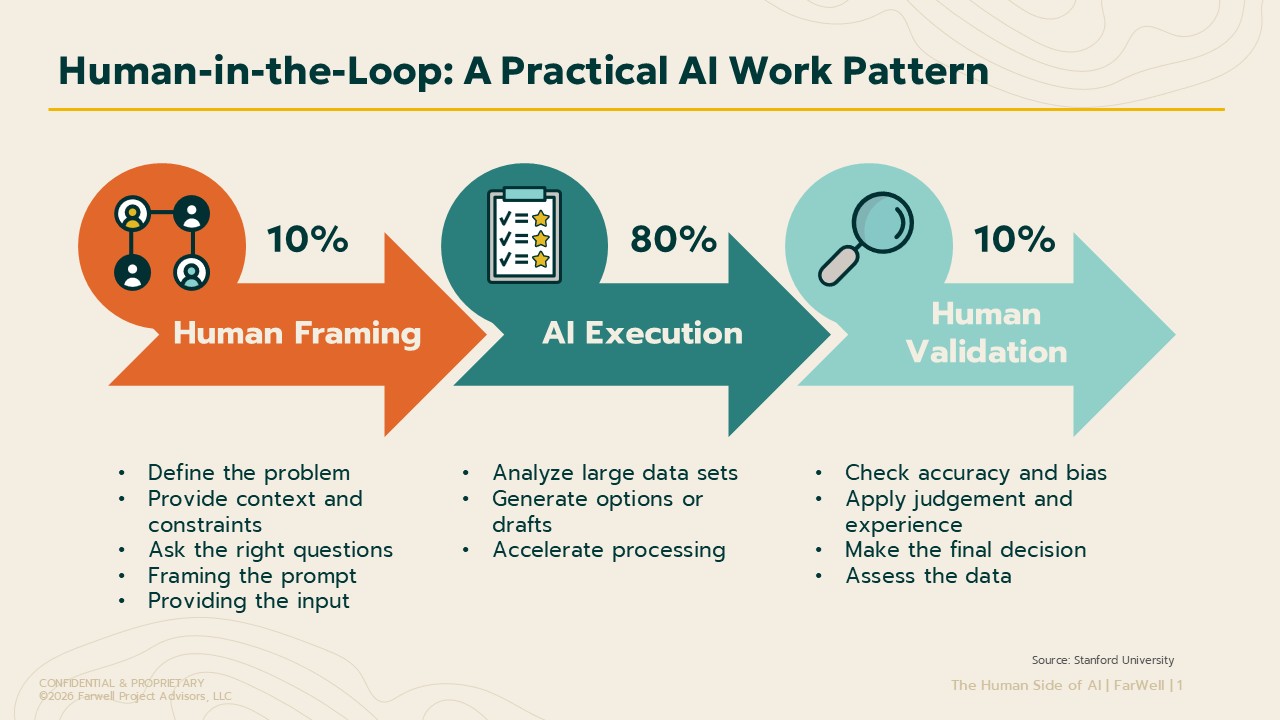
To keep humans accountable (and AI helpful), use a simple 10–80–10 pattern:
- 10% frame the work (context, constraints, and the right question).
- 80% let AI draft/summarize/analyze.
- 10% validate and decide (accuracy, bias, appropriateness).
Tools + Human Capability + Change Leadership = Outcomes
Organizations that unlock value from AI do not treat it as a one-time technology rollout. They treat it as an ongoing, people-centered transformation, where three elements move together:
- Tools: usable AI in real workflows.
- Capability: people who can frame, verify, and apply outputs responsibly.
- Change leadership: clear guardrails, visible sponsorship, practical support, and reinforcement that sustain adoption.
If one piece is missing, adoption stalls and risk rises—so it’s important to enable all three together.
Eight Change Levers Leaders Can Pull Right Now
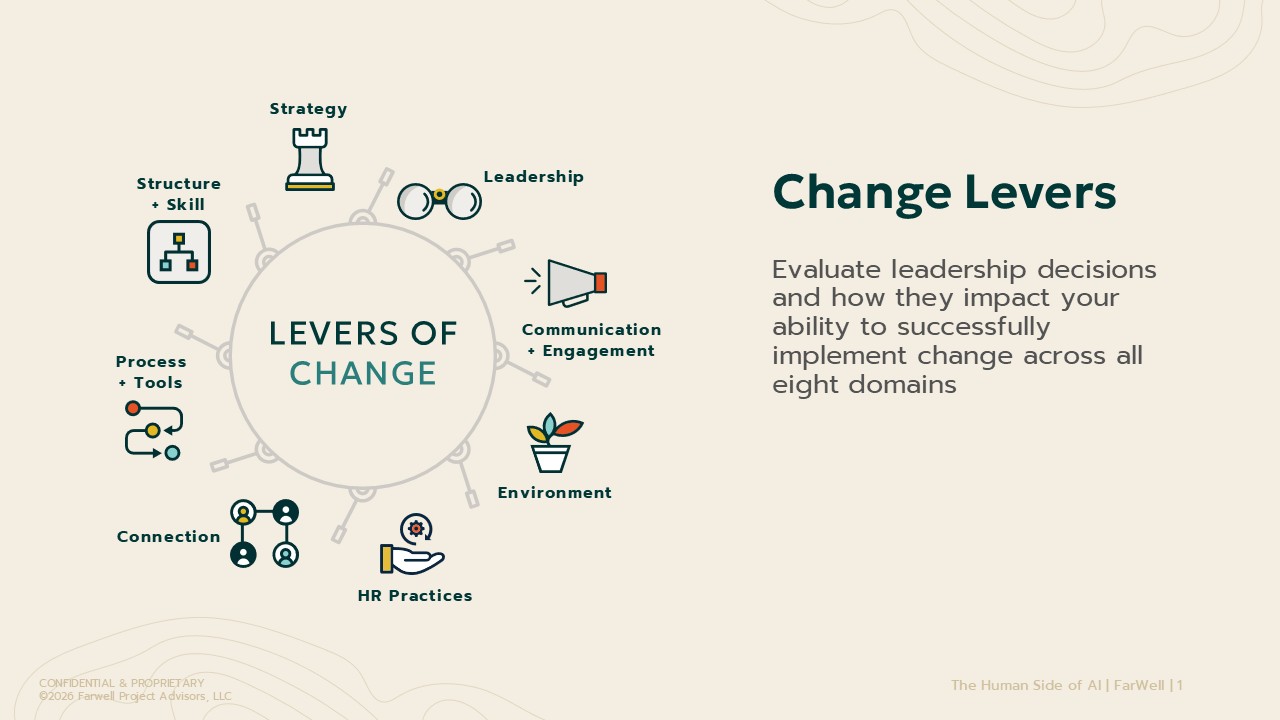
You do not need a perfect enterprise AI program to start making progress. These eight change levers help leaders turn AI access into adoption, capability, and business value. Start with one or two, apply them intentionally, and build from there.
- Strategy: tie AI adoption to business goals and a short list of priority use cases.
- Leadership: model responsible use, reinforce expectations, and coach teams through uncertainty.
- Communication + engagement: explain the why, share wins and learnings, and invite questions.
- Environment: build psychological safety so experimentation feels safe.
- HR practices: build AI expectations into roles, development plans, and rewards and recognition.
- Connection: enable peer learning and cross-team sharing of prompts, workflows, and lessons learned.
- Process + tools: share clear guidelines, templates, tools, and workflows that reduce friction.
- Structure + skill: align roles and invest in skills like critical thinking and judgment.
Bottom Line: The Human Side Is the ROI Side
AI transformation is ultimately a people challenge. Tools matter, but without trust, capability, support, and change leadership, organizations struggle to turn AI investment into measurable outcomes. The goal is to help people move from curiosity and concern to confident, responsible, day-to-day use that creates real value.
- Build capability, not just access: invest in change leadership and focus on the people side of AI literacy to build trust and confidence in safe AI use.
- Use 10–80–10: reinforce the importance of humans framing and validating; AI accelerates the middle.
- Lead the change: model the way, incorporate the 8 Change Levers, and provide guardrails while supporting and driving adoption.
Want help getting started? Reach out to our team to plan how to better incorporate the human side into your AI initiatives.